Why a Two-Year Pause Doesn't Cut It for Kyiv
A security promise that expires in two years isn't peace. It's just a breather before the next missile barrage.
That's the blunt message Ukrainian President Volodymyr Zelenskyy brought out of the Coalition of the Willing talks in Berlin on November 19, 2026, followed by his public remarks on November 21. For Kyiv, Ukraine NATO membership remains the cleanest, most reliable way to stop Russian aggression permanently. Yet as diplomatic negotiations ramp up around ending nearly five years of war, Washington and its partners have floated looser alternatives, including arrangements described as "Article 5-like" guarantees.
Zelenskyy isn't buying vague assurances or short political timelines. He wants commitments spelled out on paper that outlast Donald Trump's remaining two years in office—ideally stretching for decades or forever. Even more pointedly, he pushed back against the idea that personal rapport between leaders, or a temporary diplomatic freeze, can substitute for binding collective defense.
Look at what happened right after those high-level diplomatic moves. According to Zelenskyy, Russia launched an overnight attack involving 111 missiles against Ukraine. To anyone in Kyiv, that barrage is proof enough that Moscow responds to pressure and clear deterrence, not polite diplomacy or wishful thinking.
What "Article 5-Like" Guarantees Actually Mean in Practice
When diplomats talk about "Article 5-like" protection, the phrase sounds reassuring on paper. In reality, it leaves huge questions unanswered.
Under Article 5 of the North Atlantic Treaty, an armed attack against one member is treated as an attack against all, triggering collective action. When officials offer something similar to Article 5 outside formal NATO membership, the obligations get murky fast. Which countries actually step in if Russia attacks again? How quickly do they respond? Will they commit troops, air defense, intelligence, or just weapons shipments and sanctions?
Zelenskyy has made clear that Kyiv still hasn't seen concrete answers to those questions—or even a single binding commitment in writing. When speaking to reporters on November 13, he noted that U.S. officials had discussed arrangements resembling Articles 4 and 5, yet when pressed on whether that meant American troops on Ukrainian soil, the answer was no.
That gap is why European leaders are wrestling with the logic of half-measures. As The Brussels Times reported around the Berlin gathering, French President Emmanuel Macron called for reopening the debate on Ukraine joining NATO, while the Élysée noted that extending Article 5-style protection would practically amount to bringing Ukraine into the alliance anyway.
If allies end up shoulder-to-shoulder with Ukraine during a future crisis without giving Kyiv a seat at the NATO table, they carry much of the risk without the unified command structure or deterrence clarity that full membership provides. Honestly, half-pregnant security guarantees tend to fail right when deterrence is tested most.
The Price Tag of Staying Outside the Alliance
A lot of commentators treat Ukraine's push for NATO membership as purely symbolic or ideological. That misses the math.
Zelenskyy has argued that bringing Ukraine into NATO isn't a charity play for Kyiv—it's cheaper for everyone. Outside the alliance, Ukraine has to maintain a massive military force of roughly one million troops alongside heavy stockpiles of artillery, missiles, aircraft, and layered air defenses just to hold the line on its own. Financing and sustaining that kind of standalone deterrence year after year is grueling.
Inside NATO, burden-sharing and integrated defense planning change the equation. Plus, Ukraine brings battle-tested forces, drone and electronic warfare experience, and frontline knowledge that few Western militaries can match. As The Kyiv Independent highlighted, full accession still faces steep hurdles because every current member must agree, and consensus hasn't been reached.
Still, ignoring the cost angle leaves a big blind spot in Western debates. Paying endlessly to prop up a non-member army outside NATO isn't necessarily cheaper or safer than integrating a capable partner into a shared defense framework.
Diplomacy, "Yalta 2," and Humanitarian Evacuations
Why Kyiv Rejected the "Yalta 2" Framing
Alongside the debate over alliances, Zelenskyy pushed back against Russian President Vladimir Putin's attempts to frame global talks around a modern "Yalta"—a reference to the 1945 summit where Allied leaders carved out spheres of influence in postwar Europe.
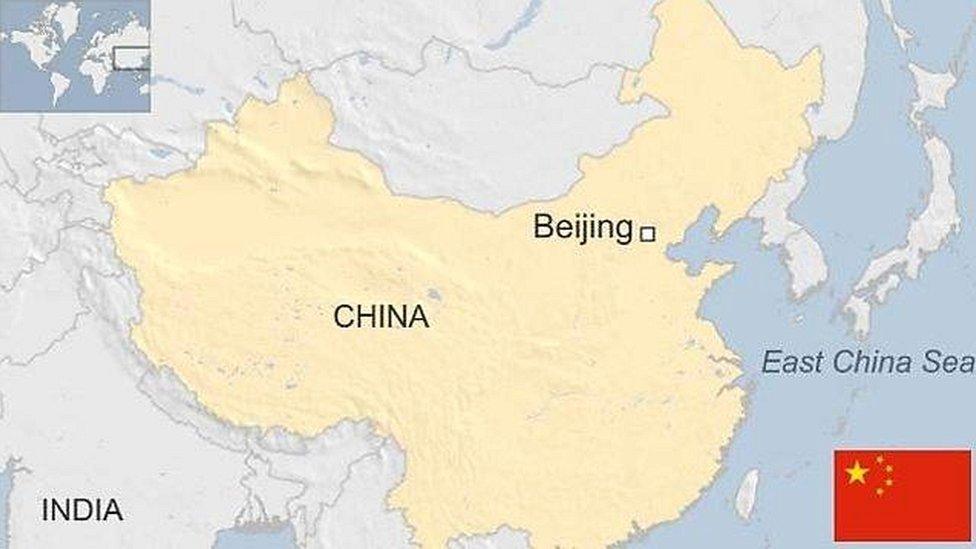
Zelenskyy argued that Putin failed to get the border-redrawing deal he wanted, noting that China didn't get pulled into that script and that no public agreement emerged altering Ukraine's borders. His point was sharp: if leaders are going to talk seriously about postwar order and security, Ukraine and Europe have to be at the table, not treated as bargaining chips behind closed doors.
Evacuations From Frontline Settlements
Diplomatic headlines can feel abstract when people are trying to get out of active war zones. In his November 21 remarks, Zelenskyy thanked U.S. First Lady Melania Trump for helping unblock and evacuate civilians from Oleshky, and said he had reviewed an updated list of settlements for potential humanitarian evacuations with Ukrainian military commander Mykhailo Drapatyi.
The list named several settlements in the Kherson region—including Radensk, Kostohryzove, Hola Prystan, Stara Zburivka, Nova Zburivka, Hladkivka, Velyki Kopani, Kardashynka, and Velyka Kardashynka—along with Mayachka, Zlatopil, Dniprorudne, Kamyanske, Verkhnia Krynytsia, and Vasylivka in the Zaporizhzhia region.
That detail matters because it shows two tracks running at once. While diplomats argue over treaties, timelines, and alliance rules, local families in contested towns are still trying to get to safety before winter conditions and strikes worsen.
Common Misconceptions About Ukraine and NATO
People argue about this war with plenty of certainty and not always enough precision. Here are a few points that get tangled up in public debate:
- Article 5 means automatic nuclear war or instant troops everywhere: Not quite. Article 5 requires each member to take the action it deems necessary, including armed force, to restore and maintain security in the North Atlantic area. Deterrence works because adversaries don't know how far allies will escalate, not because every response looks identical.
- Any security guarantee is better than none: A vague promise with no enforcement mechanism can actually be dangerous if it lulls policymakers into under-investing in real defenses while failing to deter Moscow.
- NATO membership happens overnight once leaders agree: Accession requires unanimous approval from existing members and alignment on political and military standards, which is why talks over how the war ends remain central to the timeline.
- European security is separate from Ukraine's security: After five years of large-scale war on the continent's eastern edge, European defense planners largely treat Ukraine's stability as directly tied to their own borders, energy routes, and political resilience.
Practical Next Steps for Following This Debate
If you're tracking peace talks, European defense policy, or geopolitical risk, don't get fooled by dramatic soundbites alone. Watch the paperwork instead.
- Read the exact text of any proposed guarantee: Look for binding legal language, clear trigger conditions, and named commitments rather than press-release phrases like "ironclad" or "Article 5-like."
- Check the timeline beyond 2028: Pay attention to whether commitments are tied to a single administration or backed by multi-year funding, legislation, and allied treaties.
- Track consensus inside NATO capitals: Watch statements from Washington, Berlin, Paris, London, and Eastern European capitals to see whether unanimity on membership is moving closer or stalling.
- Follow humanitarian and frontline reporting: Pair diplomatic coverage from outlets like Ukrainska Pravda with ground reporting on missile strikes and evacuation corridors so your analysis stays grounded in what's actually happening on the ground.