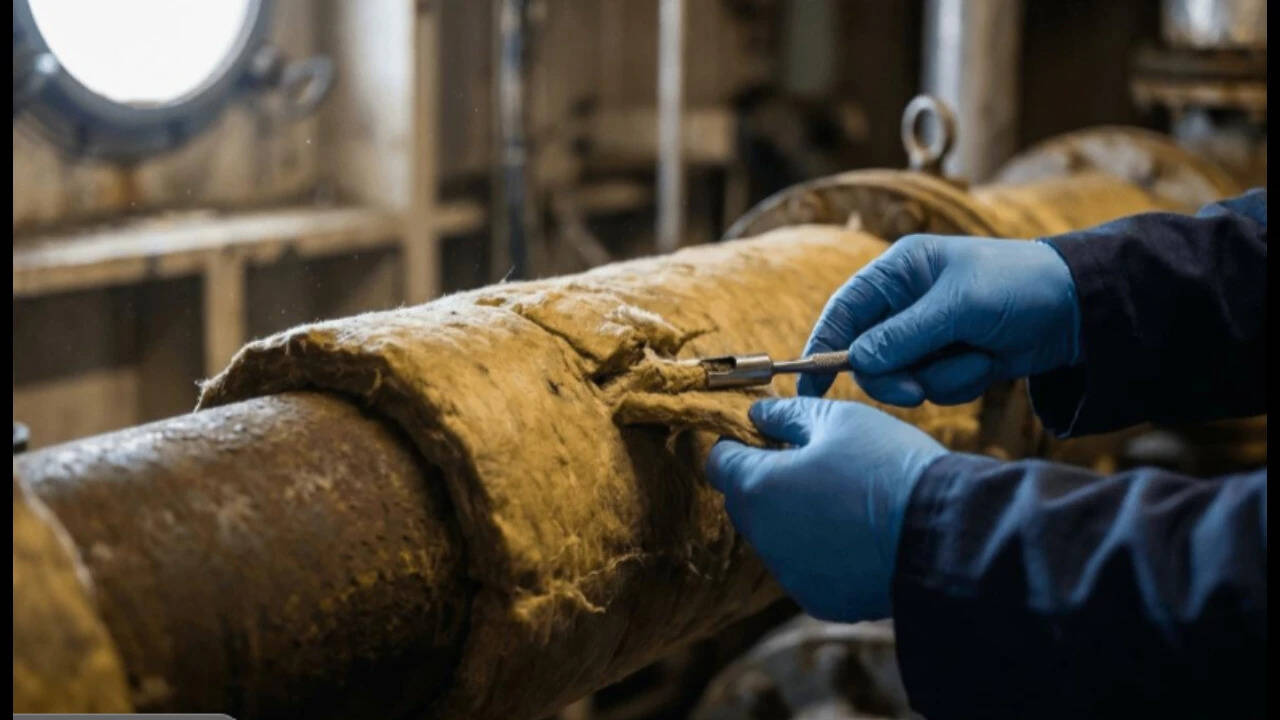
When you spend nearly four decades working inside a heavy industrial plant, you don't expect the job to quietly kill you decades later. That is the grim reality behind a recent Texas Court of Appeals decision involving Louie Scudder, a refinery worker who logged thirty-eight years at the La Gloria facility in Tyler, Texas. Scudder passed away from mesothelioma in 2022 after decades of inhaling invisible fibers while drilling into insulated pipes and sweeping up maintenance debris.
The legal fallout has dragged on for years, culminating in a complex appellate ruling that exposes the messy intersection of corporate liability, industrial safety regulations, and state statutory caps. If you think corporate accountability is straightforward, this case proves otherwise. The court upheld a severe finding of gross negligence against the refinery's successor company, Tyler MD Holdings LLC, yet simultaneously slashed the family's punitive award and revived old claims that had been thrown out years prior.
Let's break down what actually happened in the courtroom and why this precedent matters.
The Reality of Low-Level Asbestos Exposure in Refineries
For decades, industrial operations treated asbestos insulation like common chalk. Scudder started at the refinery in 1958, left briefly, and returned in 1966, staying until 1998. His daily routine involved wrenching off pipe coverings, drilling into insulated equipment, and mixing dry cement powder with water. Clouds of visible dust filled the air.
Before 1980, nobody handed him a respirator, warned him about lung hazards, or checked the air quality. It wasn't until 1989 that he received proper safety training on containment and disposal. By then, the microscopic damage was already done.
When the family took the company to trial, the defense leaned heavily on a familiar argument: Scudder's calculated exposure levels fell below the legal workplace safety limits of the era. The company argued that if numbers stay under the regulatory ceiling, the employer shouldn't face gross negligence claims.
The court didn't buy it. Industrial hygiene experts testified that even moderate exposure—roughly estimated between 1972 and 1980—more than doubled the statistical risk of developing mesothelioma. Medical testimony confirmed that the refinery dust was a substantial and direct factor in Scudder's fatal illness. A jury agreed, slapping the company with a hefty penalty for turning a blind eye to known industrial hazards.
Why the Punitive Award Got Sliced
Juries love to send messages with massive monetary awards, but state laws have rigid guardrails. The jury originally handed Scudder's family $325,000 in exemplary damages, alongside $175,000 for past and future financial losses suffered by his wife, Mary Ann, who lost her husband's household maintenance and gardening labor.
The appellate court dismantled the financial loss calculation with cold pragmatism. Mary Ann testified that she paid a local worker forty dollars to mow the lawn once. Because she couldn't prove how often those services were genuinely required or establish a concrete baseline for miscellaneous household chores, the court tossed the $175,000 financial loss figure out.
On top of that, Texas law enforces strict caps on exemplary damages. The appeals court reduced the punitive award down to $200,000 to comply with statutory limits. Winning a moral victory against corporate negligence doesn't mean a blank check will clear.
The Plot Twist: Reviving Dead Claims
While the damages took a hit, the family scored an unexpected legal second wind. A lower court had previously dismissed additional negligence claims, accepting the company's defense that workers' compensation rules shielded them from extra liability.
The appeals court dug deeper into the paperwork and found glaring holes. Tyler MD failed to provide sufficient proof that it carried the required workers' compensation insurance coverage for the specific years Scudder worked. Furthermore, Texas law didn't officially recognize mesothelioma as a covered occupational disease until an amendment took effect in August 1971.
By stripping away the blanket protection of the workers' comp shield for those uncovered periods, the appellate court reversed the dismissal. The extra claims are now heading back for further proceedings. The legal battle is far from over, and the company faces renewed scrutiny on multiple fronts.
What This Means for Future Industrial Litigants
This ruling sends a sharp message across the energy and manufacturing sectors. First, complying with outdated or minimal historical exposure standards does not grant absolute immunity from gross negligence claims if an employer clearly ignored mounting safety warnings. The National Safety Council was discussing mesothelioma risks as early as 1966, giving plants ample notice that asbestos was a silent killer.
Second, documentation is everything. Companies that fail to maintain pristine records proving active air monitoring, strict safety enforcement, and verified workers' compensation coverage leave themselves wide open to resurrected lawsuits decades down the line.
Families navigating similar wrongful death claims must prepare for aggressive legal pushback on economic damages. Vague estimates of household contributions won't survive appellate scrutiny without hard receipts and clear timelines.
Justice in industrial exposure cases moves painfully slow. Louie Scudder spent thirty-eight years working a trade, fought a terminal illness in his final years, and his family is still battling through the appellate system long after his passing. Accountability exists, but it requires relentless proof every step of the way.