For decades, modern American warfare relied on absolute air superiority. If a service member fell overseas, transport networks and medical evacuation chopper fleets usually moved the remains out of the combat zone fast. You didn't have to worry about battlefield interment because total control of the skies meant quick repatriation.
That calculus is shifting. Recently, units like the 3rd Corps Sustainment Command and the 20th Engineer Brigade gathered in North Carolina to run temporary battlefield burial drills for the first time since the Korean War.
If you're wondering why the military is suddenly dusting off manuals for mass graves, you have to look at the grim reality of modern high-intensity conflict, especially against peer adversaries and amid escalating tensions with Iran.
Inside the Logistics of Battlefield Interments
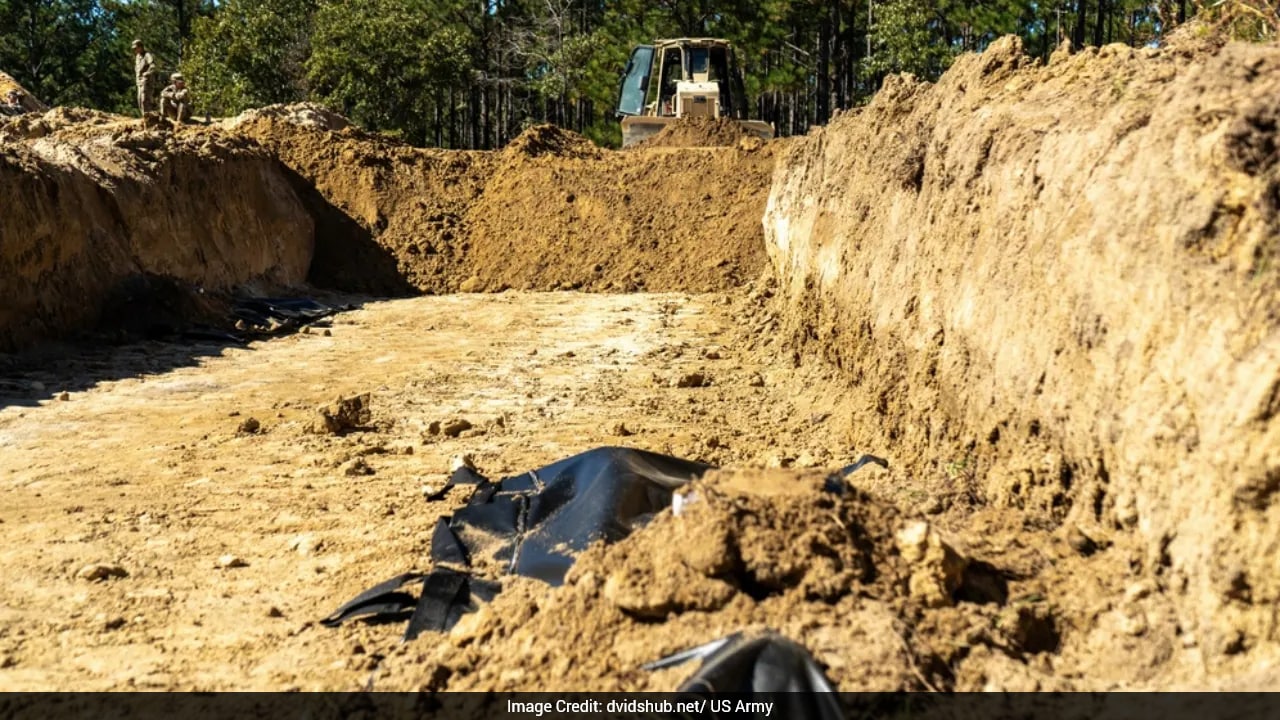
The drills weren't just vague theoretical exercises. Soldiers operated D6 bulldozers and heavy military excavators to test how quickly they could open ground under intense operational pressure.
According to military reporting from the training grounds, a standard temporary burial arrangement involves five parallel trenches designed to hold roughly 100 casualties. Engineers found they could prep a single trench capable of holding about twenty remains in an hour and fifteen minutes. Run eight bulldozers and four excavators continuously, and planners estimate an engineer company could temporarily bury up to 2,400 fallen personnel within a 24-hour window.
No human remains were used, obviously. Troops relied on skeletal models and sealed water containers placed inside standard burial bags to practice handling procedures with heavy machinery without damaging the remains.
The Reality Check Behind the Exercises
Why now? Decades of counterinsurgency in Iraq and Afghanistan spoiled military planners. When you're fighting non-state actors with zero anti-access or area-denial capabilities, logistics lines stay wide open.
A conflict against a heavily armed state adversary changes everything. If air defense networks make immediate casualty evacuation impossible, or if transport links get completely severed during intense regional engagements, troops on the ground cannot simply wait for medevac birds that can't fly.
Sergeant First Class Delbert Ruede pointed out during the training that the goal is replacing an improvised, panicked response with a systematic, field-tested protocol. It's about preserving dignity, ensuring proper identification, and maintaining positive control of remains so that every single service member can eventually be repatriated home.
Even military chaplains and religious affairs personnel took part in these drills for the first time in over twenty years, signaling a broad institutional acknowledgment that future wars might look nothing like the asymmetric conflicts of the past generation.
Stop pretending modern war is clean or always mobile. When superpowers clash or proxies trigger regional conflagrations, armies have to prepare for the absolute worst-case scenario. That means digging trenches, counting minutes, and facing the brutal arithmetic of high-casualty combat before it actually arrives on your doorstep.