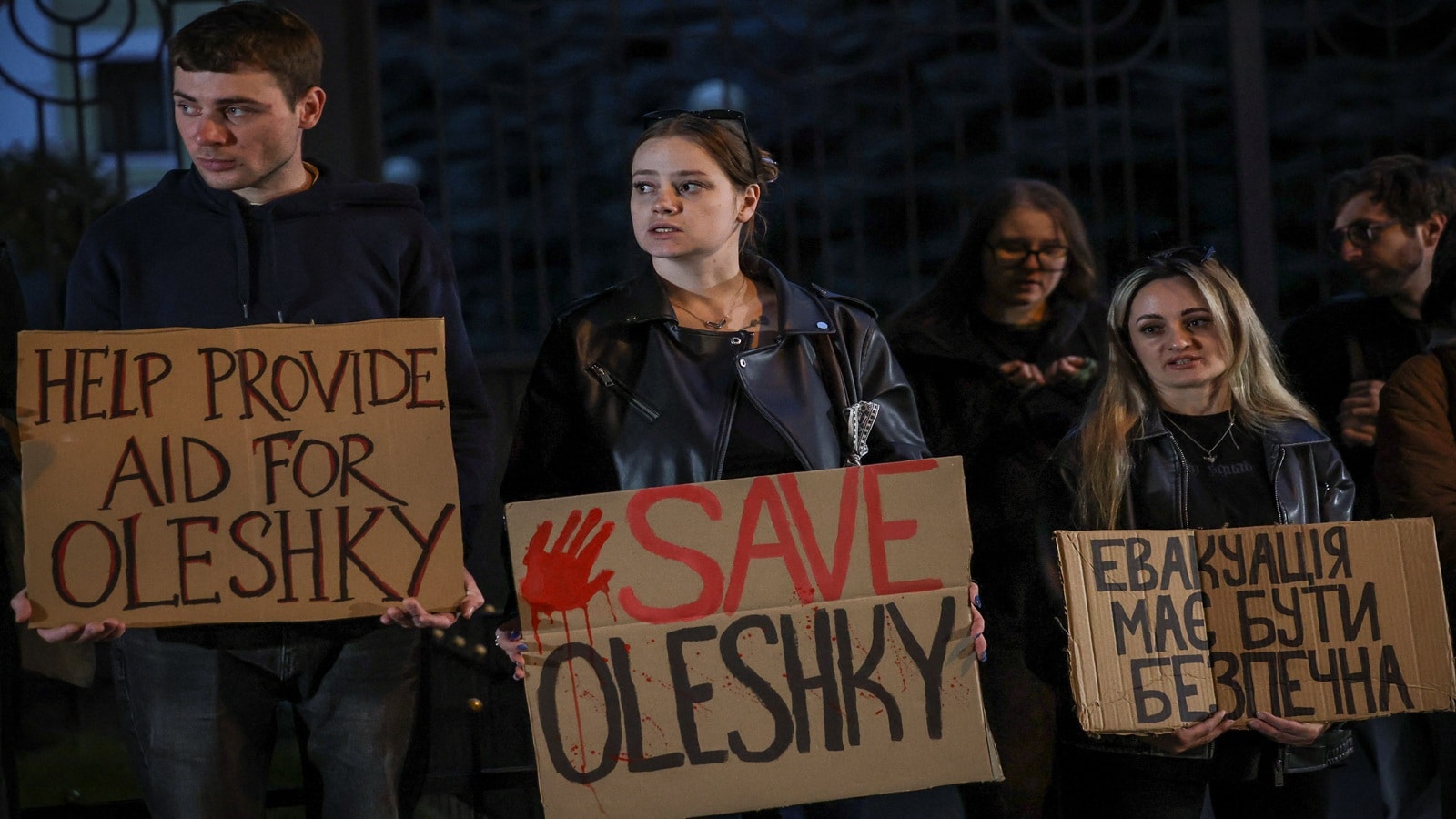
Rarely does a single localized ceasefire pierce through years of brutal artillery exchanges, but that is precisely what happened when a temporary truce unlocked access to the devastated southern Ukrainian city of Oleshky. For months, roughly 2,000 remaining residents endured critical shortages of food, water, and medicine under Russian occupation, cut off from meaningful aid. Now, a multi-day humanitarian window negotiated with direct diplomatic backing from the United States has allowed a convoy of buses, ambulances, and supply trucks to roll into the stricken area.
You need to understand why Oleshky became such an urgent flashpoint. Situated in the Kherson region right across the Dnipro River from Ukrainian-controlled territory, the city suffered catastrophic compounding damage from both combat operations and the disastrous flooding triggered by the Kakhovka Dam collapse. When infrastructure failed completely, freezing winter conditions approached, and basic supplies vanished, local volunteers sounded the alarm. The humanitarian crisis grew so severe that it forced a rare tactical pause in an otherwise relentless war of attrition.
Inside the Oleshky Humanitarian Corridor
Executing an aid mission across active front lines requires painstaking coordination. Before a single humanitarian vehicle could move, specialized teams had to clear heavily mined access routes. This dangerous demining phase took days and tragically cost two lives, highlighting the volatile reality of operating in occupied territory.
Once safety clearances were established, a convoy organized out of Armyansk—a town in Russian-occupied southern Ukraine roughly 85 kilometers south of Oleshky—began its approach. The logistics plan was straightforward yet delicate:
- Delivering critical reserves of food, clean water, and medical supplies directly to those choosing to stay.
- Providing safe evacuation transport via 25 buses and ambulances for roughly 1,000 residents who expressed an urgent desire to leave.
- Allowing evacuees the choice to travel toward either Russian or Ukrainian territory based on their personal circumstances.
Diplomats and humanitarian officials from multiple nations stressed that the presence of a Ukrainian delegation on the ground was essential. Many displaced locals harbored deep fears of detention or aggressive interrogation by occupying forces, making neutral oversight a non-negotiable condition for civilian trust.
The Broader Geopolitical Ripple Effect
While fighting continues unabated across the rest of the front lines—as evidenced by heavy drone and missile exchanges elsewhere in the country—this localized agreement represents a fascinating diplomatic breakthrough. Observers note that both Moscow and Kyiv face intense international pressure, particularly as Washington pushes for broader peace frameworks and future diplomatic summits in places like Abu Dhabi.
Yet, treating this temporary pause as a sign of imminent comprehensive peace is a mistake. The Oleshky arrangement remains strictly localized and time-bound. It solves a discrete, harrowing human catastrophe for a single abandoned municipality without altering the fundamental military posture of either army.
What Happens When the Truce Ends
The real test of this mission isn't just whether the aid trucks arrived on schedule; it's whether temporary humanitarian corridors can ever be replicated in other contested zones. Thousands of civilians remain trapped in frontline settlements across eastern and southern Ukraine, facing similar humanitarian deficits as infrastructure crumbles beneath continuous shelling.
If this localized pause holds until its scheduled conclusion, it provides a very narrow blueprint for depoliticizing civilian survival amid intense geopolitical conflict. Watch how the logistics of these evacuations unfold over the coming days, because they might just dictate the playbook for the next humanitarian breakthrough in this grinding conflict.