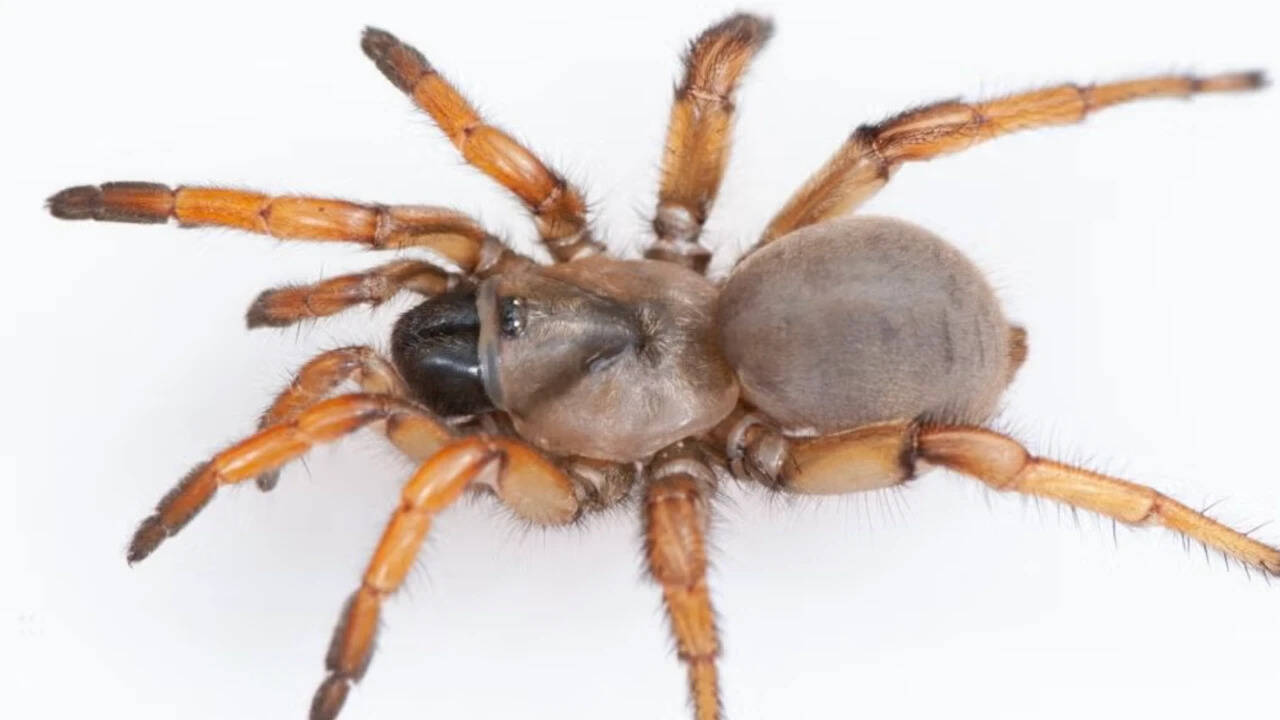
A quarter-sized California trapdoor spider named after Stephen Colbert packs a giant genetic punch. Seriously, its genome runs roughly 50% larger than ours, and it carries 52 chromosomes while normal human body cells have 46.
Back in 2008, comedian Stephen Colbert got a little jealous after finding out biologist Jason Bond had named a trapdoor spider after rock musician Neil Young. Colbert complained about the snub on The Colbert Report during his "Who's Not Honoring Me Now?" segment and basically demanded a spider of his own. Bond came through, naming the species Aptostichus stephencolberti—and yes, the final "t" in Colbert is silent.
Almost two decades later, researchers at the University of California, Davis, along with collaborators at UC Santa Cruz, UCLA, and Virginia Tech, sequenced the species' genome and published their findings in the Journal of Heredity in late October 2026. If you've ever walked along California's coastal dunes between Monterey and the San Francisco Bay, you've probably walked right over these little burrowers without realizing it. And no, they don't care about cable news.
What Makes This California Trapdoor Spider Genome So Strange
When people hear a tiny spider has a bigger genome than humans, they usually assume the spider has way more genes or extra brainpower. That's not how biology works. Size doesn't equal complexity here. For broader background on this development, extensive reporting is available on Al Jazeera.
According to UC Davis's reporting on the study, the spider's genome is estimated at roughly 4.6 billion DNA base pairs, compared to about 3.1 billion base pairs in a human genome—though the primary genome assembly reported in the research spans 3.63 billion base pairs (with one sequencing report noting a 3.87 billion base pair total estimate). Either way, it's huge for a spider roughly the size of a US quarter.
Here's the catch that surprises even seasoned science fans: about 77% of that assembled genome consists of repetitive DNA sequences. Instead of coding for tons of extra proteins or superpowers, those sequences get copied and repeated over and over across the genome. Think of it like a book where the same paragraphs get photocopied dozens of times into the margins. It makes the file massive, not necessarily smarter.
Then there's the chromosome count. The study estimates Aptostichus stephencolberti has 52 chromosomes, compared with 23 in a human haploid set (46 in typical human body cells). Even weirder, researchers found that this spider—like other spiders they checked—lacks the conventional telomere repeat sequences that cap chromosome ends in many other organisms.
Why does that matter? Telomeres normally protect the ends of chromosomes from fraying or fusing during cell division. Losing standard telomere repeats may help explain why spider chromosomes evolve faster than vertebrate chromosomes. In field genetics and evolutionary biology, finding a pattern that breaks a textbook rule is gold because it forces you to rethink how chromosomes stay stable over millions of years.
Living Under a Hinged Door in California Dunes
Competitor recaps love to treat Aptostichus stephencolberti like a punchline first and an animal second. Honestly, that misses half the fun.
Unlike orb-weaver spiders that spin big, flashy webs in bushes or gardens, trapdoor spiders stay hidden. Female Aptostichus stephencolberti spend practically their entire lives underground inside silk-lined burrows capped with a hinged, camouflaged door made of silk, sand, and soil. They don't go out jogging looking for dinner. They sit quietly inside, feeling vibrations through the ground when an insect wanders nearby, then burst out through the trapdoor to grab prey before ducking back out of sight.
People see a stocky, dark-legged spider and immediately worry about getting bitten. Let's set the record straight: this spider isn't dangerous to humans. Jason Bond, a professor in UC Davis's Department of Entomology and Nematology and corresponding author on the study, notes that out of more than 50,000 known spider species, only about 30 to 50 have venom known to be toxic to people.
In my experience talking with outdoor hikers and beach visitors, fear usually comes from surprise rather than real risk. If you dig around dunes without looking, you might disturb a burrow, sure—but you're not facing some venomous monster. Still, poking at burrows with a stick is a bad idea. You crush fragile silk doors and stress out a slow-moving animal that relies on a tiny patch of sand to survive.
Why Scientists Care Beyond the Colbert Joke
You might wonder why taxpayers and scientists spent time sequencing a comedian's namesake spider in the first place. Fair question. The answer comes down to conservation and natural chemistry.
This project is part of the California Conservation Genomics Project, a state-funded effort backed by California's State Budget Act of 2019 and supported by the National Science Foundation, aimed at building genetic datasets to protect California's biodiversity. It's also the first genome sequenced from the spider's family, Euctenizidae, giving evolutionary biologists a brand-new reference point.
Here's why genetics matters so much for trapdoor spiders specifically:
- Limited travel range: Trapdoor spiders don't wander far across the landscape. When coastal dunes get chopped up by roads, development, or trails, isolated spider groups can't easily mix and swap genes.
- Coastal squeeze: Narrow strips of beach and dune between Monterey and the San Francisco Bay face pressure from rising sea levels, wildfires, urban growth, and invasive plants.
- Hidden medical and farming leads: Bond has pointed out that spider venoms contain diverse natural compounds that researchers are still exploring for potential painkillers and agricultural pest control. You can't protect or study biochemical diversity if a local population disappears before anyone looks closely.
Still, I think we should stay honest about what a reference genome can and can't do on its own. Sequencing DNA gives conservationists a sharper map of genetic diversity and population structure, not a magic shield against rising tides or bulldozers. Protecting coastal dunes still takes land policy, habitat restoration, and basic restraint on the beach.
Practical Next Steps If You Care About Coastal Wildlife
If this story got you curious about California coastal ecology or genomic science, you don't need a lab coat to do something useful:
- Stay on marked dune trails: When visiting beaches and coastal reserves from the San Francisco Bay down to Monterey, stick to designated paths so you don't collapse hidden burrows or trample native dune plants.
- Read the primary UC Davis coverage: Check out the UC Davis news release on the Stephen Colbert spider genome for context on the Journal of Heredity study and the researchers behind it.
- Support local habitat stewards: Look into regional coastal conservation groups or native plant restoration days in your area—keeping intact coastal dunes is one of the most direct ways to help small, range-restricted species hold on.