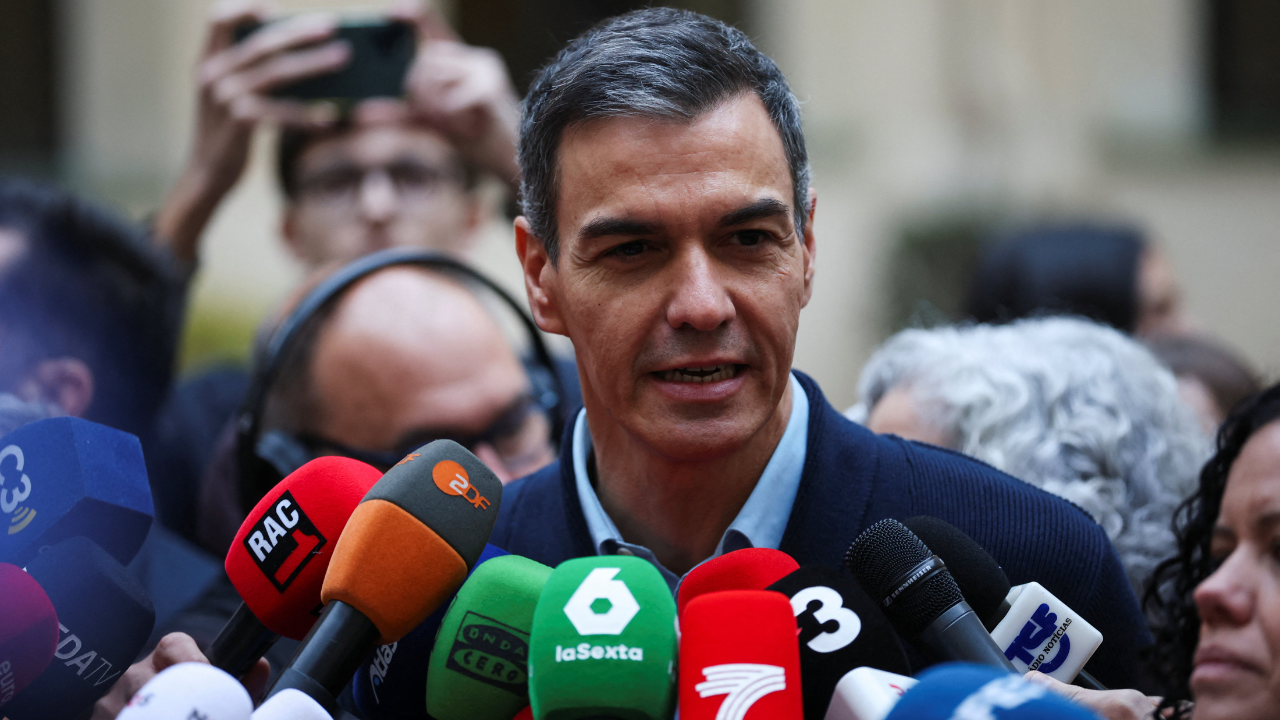
Pedro Sánchez just called it a sad night for Spain. After eight years in power, the Socialist prime minister conceded defeat late Sunday, November 29, 2026, as conservative and far-right parties cleared the majority threshold in Spain's 350-seat Congress of Deputies.
He didn't wait for the final tally to clear the air. Reports indicate Sánchez phoned People's Party leader Alberto Núñez Feijóo to congratulate him on winning the election, while telling supporters that his party accepts the outcome without suspicion or conspiracy theories.
Here's the real story behind the vote. Sánchez lost control of a fragile parliamentary arithmetic that had kept his Spanish Socialist Workers' Party, known as PSOE, afloat since 2018. Now, Feijóo's mainstream conservatives and Santiago Abascal's far-right Vox are set to command a combined majority well above the 176 seats needed to govern.
How Pedro Sánchez Lost Spain After Eight Years
Short wire stories make this sound like a sudden collapse. It wasn't. It was a slow grind.
Sánchez has survived multiple political crises over nearly a decade by stitching together coalitions with left-wing groups and regional nationalist parties like Junts and Republican Left of Catalonia. That balancing act got harder with every legislative session. When a housing relief package failed in parliament after opposition from Junts, Sánchez dissolved the chambers and called a snap election for November 29, 2026.
He's done high-wire snap bets before, and voters didn't bail him out this time.
Provisional Interior Ministry counts from Sunday night showed the People's Party (PP) leading with around 132 to 134 seats, ahead of PSOE with roughly 115 to 116 seats, while Vox surged into the low 50s. Even though the PP actually won slightly fewer seats than in 2023, Vox jumped sharply from its 2023 total of 33 seats. Put those two columns together, and the right bloc clears 176 with room to spare.
Turnout also climbed to roughly 79.59% on provisional domestic counts—the highest level since 1982. Voters showed up in big numbers, and they tilted right.
What Most People Miss About the Numbers
People love to frame an election as a clean wave or a total wipeout. That misses what actually happened on the ground in Spain.
First, the PP didn't win an outright majority on its own. Feijóo still needs Vox to cross the finish line. Second, the PSOE didn't vanish overnight; it held over 110 seats and remained Spain's second-largest party. What changed dramatically was the strength of the far right and the weakness of the smaller left-wing partners that used to give Sánchez his cushion.
In my view, that distinction matters a lot. A prime minister doesn't lose eight years of power just because opposition voters show up. He loses when his coalition partners fracture and the third party on the right captures enough momentum to dictate terms.
What a PP and Vox Majority Means for Spain
For the first time since Spain returned to democracy following Francisco Franco's death in 1975, the far right stands on the threshold of national power alongside mainstream conservatives.
That isn't an abstract milestone. It changes everything from cabinet bargaining to Spain's posture in Brussels.
- Coalition leverage: Before the vote, Feijóo said his goal was a broad majority and parliamentary support agreements with Vox, while leaving the door open to governing negotiations. Now that Vox holds well over 45 to 50 seats, Abascal has real leverage. The PP already governs alongside Vox in four Spanish regions, so this isn't uncharted territory for Feijóo—it's just the national version.
- Policy friction: Expect sharper clashes over regional autonomy, territorial deals, migration, and social policy. Vox's agenda pushes much harder to the right than traditional PP conservatism.
- European ripples: Spain is the first major test in a broader European electoral stretch where right-wing and far-right parties are pressing for influence. Foreign leaders reacted fast on Sunday night, with Italian Prime Minister Giorgia Meloni congratulating both Feijóo and Abascal and U.S. President Donald Trump welcoming Sánchez's defeat.
Is a formal coalition cabinet guaranteed, or will Vox settle for a legislative pact from outside government? Honestly, nobody knows until the horse-trading starts in earnest. Even in regional politics, winning seats is the easy part; writing a governing agreement that satisfies hardliners without alienating centrist voters is where coalitions get messy.
Why Voters Turned Against the Governing Bloc
You can't pin a snap-election loss on a single issue, yet housing, cost-of-living frustration, and parliamentary gridlock hung over the entire campaign.
When a government can't pass a flagship housing relief bill without getting tripped up by its own parliamentary arithmetic, voters start asking what the coalition is actually accomplishing. Add in years of fierce political polarization over amnesty laws, territorial concessions, and cultural debates, and opposition voters had plenty of motivation to turn out.
Vox also worked hard to connect with younger voters and frustrated Spaniards, even if Abascal's late decision to skip a high-profile Jordi Wild podcast interview drew criticism during the campaign. Still, the broader wind at Vox's back was strong enough to push its seat count way past 2023.
On the left, fragmentation hurt. Former junior partners like Podemos faced severe losses, and the left-wing Broad Front (Frente Amplio) finished with around 10 seats—far short of offsetting the right's combined total.
Where the Coverage Gets It Wrong
A lot of quick takes treat Sánchez's concession call as the end of Spanish political drama. It's really the beginning of a new phase.
First, provisional election-night tallies don't include overseas ballots right away, and final seat allocations can shift slightly as counts finish. Second, a parliamentary majority on paper doesn't erase internal tensions inside the right bloc. Feijóo has to project steady, mainstream competence to business leaders and European partners, while Abascal wants visible ideological trophies.
Also, let's be honest about political survival in Spain. Sánchez has staged comebacks that pundits swore were impossible. Conceding a defeat cleanly on election night doesn't mean he disappears from public life tomorrow; it means he moves from governing to leading an opposition that still commands over a hundred seats in Congress.
Practical Steps to Follow What Happens Next
If you're tracking Spanish politics for business, policy, or European affairs, don't stop at the headline numbers. Watch these specific milestones next:
- Track the final Congress seat tally: Check official Interior Ministry updates as counting wraps up and overseas votes are factored in.
- Watch the investiture calendar: Both chambers of the Cortes Generales are scheduled to reconvene on December 23, 2026, kicking off formal parliamentary timelines.
- Read the coalition terms carefully: Pay close attention to whether Vox demands formal ministry posts or negotiates policy commitments in exchange for backing Feijóo's investiture.
- Monitor regional and EU reactions: Watch how Spanish bond yields, Brussels policy negotiations, and regional governments respond once coalition talks get underway.
Spain's rightwing parties win majority as Sánchez faces end of eight years in power
Spain's PP wins 134 seats and needs Vox to govern as Sánchez concedes
Full statement by Pedro Sánchez calling for elections on November 29. Watching Sánchez's own announcement calling the November 29 snap election gives helpful context on the political gamble that just backfired.