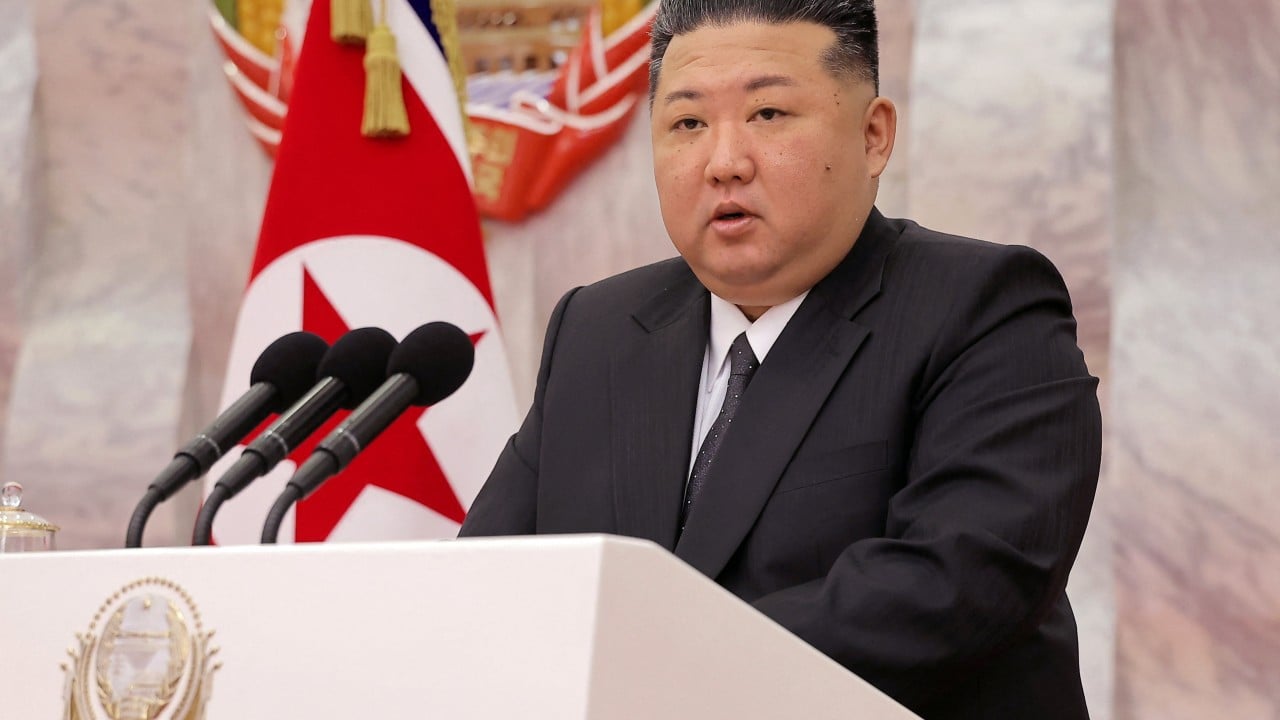
When a nuclear-armed state insists it only wants peace, nobody knows whether to laugh or lock the doors. Kim Jong Un recently made headlines by declaring that North Korea builds its military muscle strictly for survival, not regional dominance. According to state media reports covering his recent diplomatic credential ceremonies, Pyongyang maintains that its aggressive posture is purely defensive.
Of course, words from Pyongyang rarely match regional realities. South Korea, Japan, and the United States view the expanding arsenal through an entirely different lens. Yet, understanding the framing matters just as much as tracking the missile tests. Let's look at why North Korea frames its military strategy this way and what it actually signals for global security.
The Rhetoric Versus The Realities On The Ground
Kim's latest remarks arrived during a diplomatic ritual where he received credentials from newly appointed foreign ambassadors, including Russia's representative. Standing alongside Foreign Minister Choe Son Hui, Kim stated that current international turbulence forces a re-evaluation of national sovereignty. He emphasized that the Democratic People's Republic of Korea has zero interest in hegemony or territorial expansion.
You have to look at the timing. These comments surfaced right after high-stakes diplomatic passes in Asia failed to yield a sitting photo-op or a renewed dialogue track with Washington. When direct talks stall, state messaging shifts. Pyongyang leans heavily into the narrative of a victimized state forced to arm itself against hostile outside pressures.
It is a classic playbook move. By claiming the moral high ground of self-defense, North Korea tries to normalize its permanent nuclear status to friendly nations like Russia and non-aligned states.
Cementing Alliances While Shunning Denuclearization
Let's be clear about what has changed. Years of United Nations sanctions didn't stop the nuclear program. Instead, North Korea enshrined its nuclear identity directly into its domestic laws, calling that deterrent permanent and irreversible.
At the same time, Pyongyang's foreign policy has pivoted aggressively toward Moscow. Troops and military hardware have flowed outward to support Russia's ongoing war effort in Ukraine, cementing a transactional partnership of convenience. When Kim talks about independence and peace, he is really signaling solidarity with other heavily sanctioned nations that reject Western-led global norms.
Security for the Kim regime means absolute insulation from regime change. In their calculus, every intercontinental ballistic missile test and every artillery shell sent across Eurasian supply lines acts as an insurance policy against external intervention.
What This Means For Regional Stability
If you are sitting in Seoul or Tokyo, Kim's disavowal of supremacy offers zero comfort. Declarations of peace ring hollow when combined with tactical drone developments, artillery drills, and first-use nuclear doctrine legislation.
Diplomacy with North Korea remains trapped in a familiar loop. Washington and its allies want verifiable denuclearization. Pyongyang wants recognition as a legitimate nuclear power coupled with the lifting of crippling economic restrictions. Until someone changes that fundamental equation, expect more grand speeches about sovereignty masking a very tense standoff across the 38th parallel.