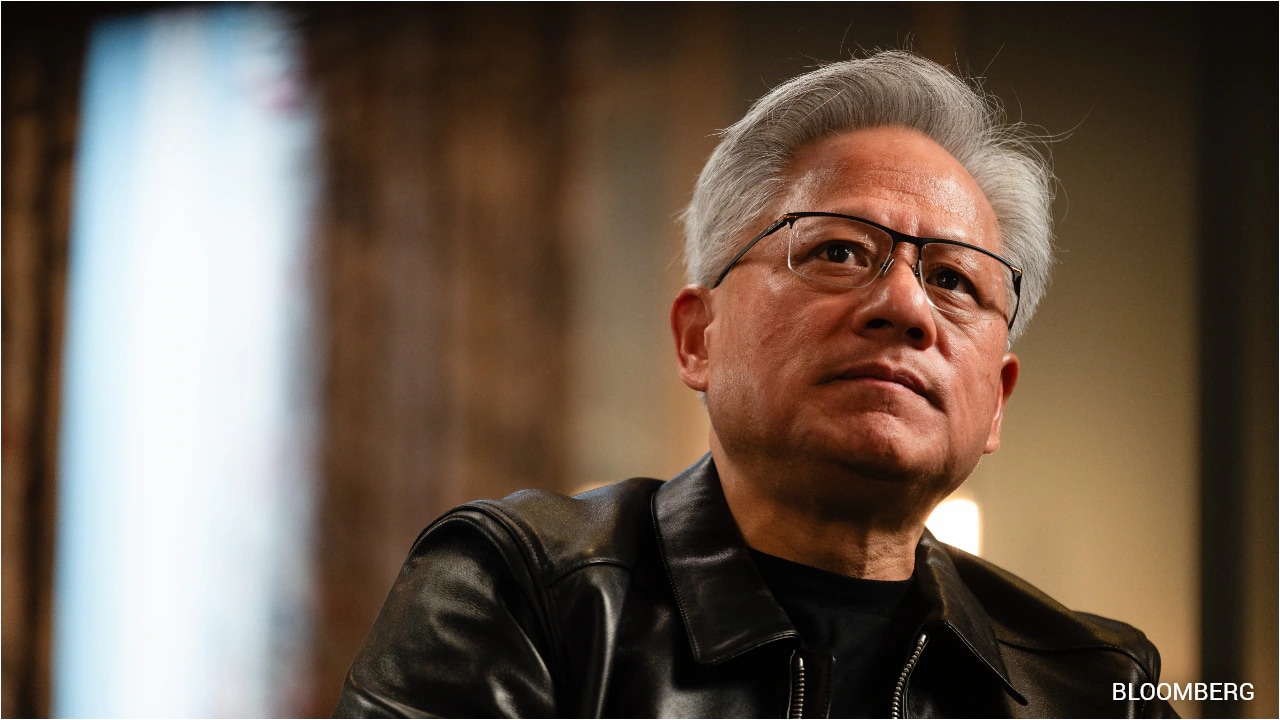
Big corporate exits usually come with golden parachutes, massive severance packages, and soft landings. But Jensen Huang’s abrupt exit from Nvidia threw out the playbook entirely. When a CEO walks away from a $138.4 billion fortune, headlines naturally latch onto the big numbers—like the $108 million in unvested equity compensation he left on the table.
If you look past the initial shock value, this forfeiture tells a much deeper story about how executive compensation is structured, how sudden management crises shake Wall Street, and why standard corporate policy applies even to legendary co-founders.
The Reality Behind the $108 Million Forfeiture
When the news broke about Huang stepping down following revelations regarding personal conduct, the financial mechanics kicked in immediately. Under Nvidia’s standard equity compensation agreements, unvested restricted stock units (RSUs) are vaporized the moment an executive's continuous service terminates.
Huang held roughly 346,000 unvested RSUs, alongside about 310,000 performance-based shares tied to future metrics that will now never hit his account.
| Compensation Component | Approximate Value / Scale |
|---|---|
| Forfeited Unvested RSUs & Performance Shares | ~$108 million |
| Total Estimated Net Worth | ~$138.4 billion |
| Percentage of Net Worth Forfeited | ~0.08% |
A hundred and eight million dollars sounds like lottery-winning money to ordinary mortals. But in the context of Huang's total wealth, it represents a tiny fraction—roughly 0.08 percent. His real financial exposure wasn't the unvested paperwork; it was the immediate market reaction. Nvidia shares took a heavy beating, plunging as much as 14 percent before closing down about 4.3 percent at $166.19, wiping more than $6 billion off his net worth in a single session.
Why Executive Compensation Rules Don't Bend for Founders
People often assume founders operate under a separate set of laws. They built the company from scratch, put the leather jacket on the map, and turned a chip designer into a multi-trillion-dollar juggernaut. Surely the board cuts a special deal?
Nvidia's governance structure proved otherwise. Because the company operates with a single class of common shares, Huang didn't hold super-voting privileges or special exemption clauses shielding his compensation package. Corporate policy is blind to founder status when an executive's service ends abruptly.
Unlike many tech executives whose fortunes rely heavily on complex options or massive annual grants, Huang’s wealth has always been anchored directly in his massive baseline holdings of Nvidia common stock—making up nearly 97 percent of his entire net worth. He didn't need the unvested RSUs. His cash compensation over the past two years hovered around $7.5 million annually, a drop in the ocean compared to the daily fluctuations of his core equity stake.
What Happens to Nvidia Without Its Driver
Jensen once famously described Nvidia as a high-performance Formula 1 race car built specifically for him to drive, with everyone else serving as specialized engine parts. Removing the driver overnight leaves the entire vehicle handling differently.
Wall Street immediately scrambled to reprice the risk. Investment banks adjusted ratings, analysts debated the stability of massive AI infrastructure supply chains, and the board tapped Colette Kress as interim CEO while naming Harvey K. Jones as chairman.
The loss of $108 million in unvested equity is basically a footnote compared to the strategic vacuum left behind. Nvidia's entire ecosystem—spanning deep hardware integration, venture investments in cloud providers, and complex global manufacturing partnerships—now has to prove it can run smoothly without the charismatic leader who defined its trajectory for decades.
Corporate governance rules did their job by stripping away unearned future stock. Now comes the hard part for the rest of the company: proving that the engine can drive itself.