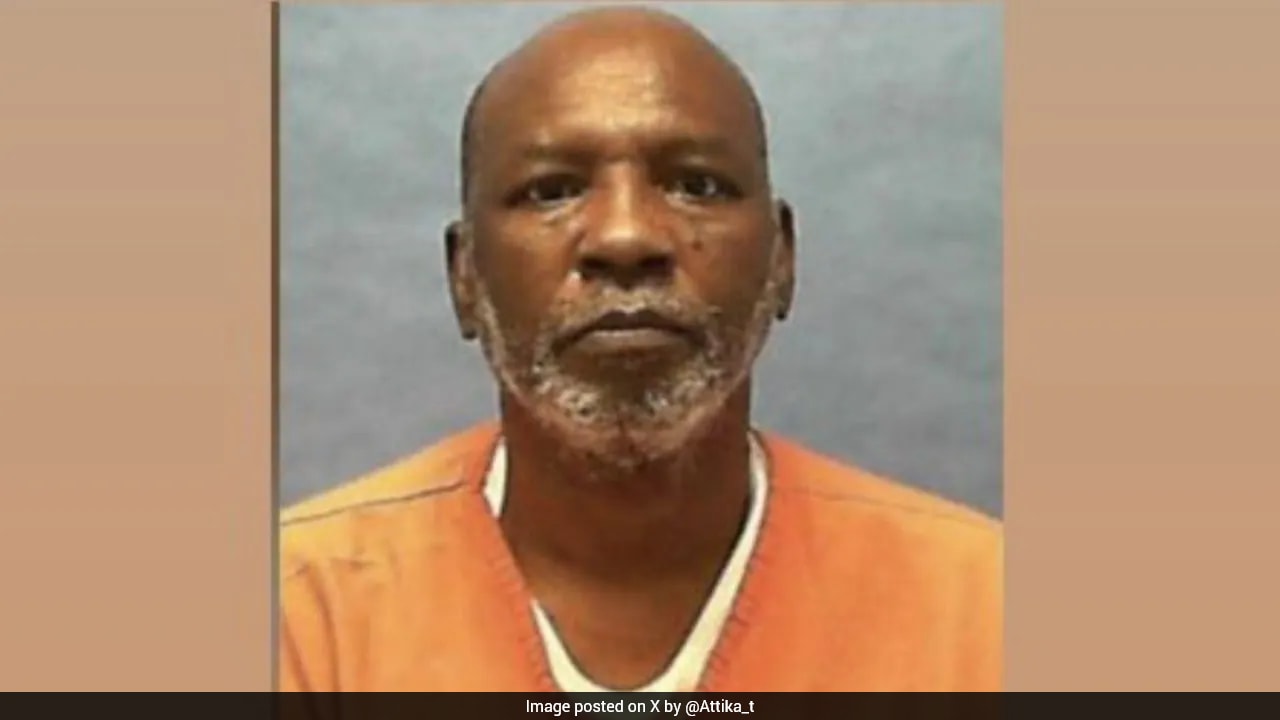
The curtain went up right on schedule at six in the evening. Strapped to a gurney inside Florida State Prison near Starke, seventy-seven-year-old William Reaves faced an intravenous line and a final medical team. When the warden asked if he had any last words, Reaves kept it short. He said he didn't. Thirty seconds after the three-drug injection began, he took a few deep breaths and stopped moving.
Just like that, Florida carried out its eighteenth execution of the year.
Governor Ron DeSantis is pushing an aggressive capital punishment strategy during his final term, aiming to deliver closure to victims' families who have waited decades for legal outcomes. But this particular case highlights a glaring reality in America's penal system. Death row is getting older. Reaves was the eighth Florida prisoner over the age of seventy put to death in a single year.
Let's look at the numbers. Florida led the nation with nineteen executions last year, setting a state record. Now, they're on track to match or break that pace before the year ends, dominating national capital punishment statistics while other states scale back or struggle with legal roadblocks.
Decades on Death Row and a Decades-Old Crime
The crime that sealed Reaves' fate happened way back on September 23, 1986. Indian River County sheriff's deputy Richard Raczkoski responded to a routine call at a Vero Beach convenience store after Reaves used a payphone outside. During their conversation, a gun fell from Reaves' shorts. A physical struggle followed. Investigators established that as the deputy tried to run away, Reaves shot him four times.
The legal battle stretched across almost forty years. Reaves was originally convicted and sentenced to death a year after the shooting. However, the Florida Supreme Court overturned that verdict due to a conflict of interest involving the prosecutor. A second trial in 1992 resulted in another guilty verdict and a fresh death sentence. Subsequent appeals dragged on for decades until the United States Supreme Court rejected his final eleventh-hour plea without comment.
The Battle Over Mitigating Factors and Lethal Protocols
Reaves' legal team fought hard until the very end, raising two major arguments that spark heavy debate among legal experts and human rights advocates.
First, they challenged Florida's three-drug lethal injection protocol. The state uses a sedative, a paralytic, and a chemical to stop the heart. While courts have repeatedly upheld this method against constitutional challenges, critics point out how drastically it contrasts with single-drug protocols used elsewhere.
Second, defense attorneys pointed to Reaves' military background. Jurors who originally recommended the death penalty were never told that the Department of Veterans Affairs had rated Reaves as one hundred percent disabled due to severe post-traumatic stress disorder from his service in the Vietnam War. More than a hundred military veterans wrote directly to DeSantis urging him to halt the execution based on his service history, but the appeals fell flat.
A Divided Public and Shifting Views on Justice
The aftermath of the execution revealed deep fractures in how people view capital punishment, even among law enforcement and victims' families.
Marc Raczkoski, the slain deputy's brother, told reporters that his brother finally received true justice. Yet Indian River County Sheriff Eric Flowers offered a very different perspective after witnessing the procedure. He argued that waiting decades for an elderly man to die of state-sponsored lethal injection doesn't feel like real justice. He noted that dying peacefully at seventy-seven is a luxury the deputy never got.
State officials show no signs of slowing down. Another execution is already locked in for early November, keeping Florida at the center of America's capital punishment debate. As death row populations continue to age across the country, cases like this force a hard look at the massive time gap between a crime, a conviction, and the final executioner's drop of the curtain.


